


Stair Railing Code Requirements: When to Hire a Professional
- Jul 11, 2025
- 10 min read
Updated: Jan 8

If you’ve ever walked down a set of narrow basement stairs and thought, “Shouldn’t there be a railing here?” — you’re definitely not alone. It’s one of the most common questions we hear from homeowners, especially when they’re finishing a basement or updating an older home.
Basement stairs are a little different from the main staircase everyone sees. They’re often steeper, tighter, and not nearly as well-lit. And because many homes were built years before current safety standards, it’s not always obvious whether a railing is required — or whether skipping one could become a problem later on.
In this guide, we’ll walk through what the building code actually says about basement stair railings, when a handrail is required, and when adding a handrail professionally is simply the smarter move for safety, inspections, and peace of mind.
What the Stair Railing Code Requirements Say About Basement Stairs
Residential Building Code Basics
When it comes to stair railings — basement stairs included — the rules themselves are fairly straightforward. Most states, including New Jersey, base their residential requirements on the International Residential Code (IRC).
According to IRC R311.7.8, any staircase with four or more risers must have a handrail on at least one side. That includes basement stairs — even the narrow, steep ones tucked behind a utility room door that don’t get much daily attention.
The code also spells out a few specific requirements:
Handrails must be installed 34 to 38 inches above the stair nosing
They need to be continuous for the full length of the stair run
They must be graspable, meaning flat trim or decorative ledges don’t count
On paper, those rules sound simple. In real homes, especially older ones, this is where things often get tricky. We regularly see stairs that have something mounted on the wall, but it doesn’t meet current height, spacing, or mounting standards — which is why issues are often flagged during inspections.
The goal isn’t just checking a code box. Basement stairs tend to have lower light, tighter clearances, and heavier use than people expect, which makes a properly installed handrail one of the easiest ways to reduce fall risk in the home.

How Many Steps Require a Railing?
This is where things tend to get confusing — and where we see a lot of well-intentioned homeowners make assumptions that don’t quite hold up in real life.
Under the International Residential Code (IRC), a handrail is required on any staircase with four or more risers. In other words, once a stairway reaches that point, a properly installed handrail isn’t optional — it’s part of code-compliant stair construction. This applies to basement stairs just like any other indoor staircase.
Where people get tripped up is assuming that fewer steps automatically means no railing is needed. In practice, there’s another rule that often comes into play: if a staircase or landing rises more than 30 inches, a guardrail may also be required, even if the stair run itself is short.
That distinction matters.
A handrail is designed to be grasped as you move up or down the stairs. It provides balance and control and must meet specific height and grip requirements. A guardrail, on the other hand, is there to prevent falls from elevated edges or open sides of stairs and landings. Both are common elements in professional stair railing installation, and both are frequently evaluated during inspections.
The confusion usually happens in basements where stairs feel enclosed or “low risk.” From a code and safety standpoint, however, stairways are evaluated based on height, layout, and fall potential — not how casual they feel to use.
In New Jersey, local requirements generally follow the IRC, but townships can enforce additional standards. That’s why indoor railing code compliance often comes down to more than just counting steps. Layout, lighting, stair width, and how the railing is mounted all play a role in whether a setup truly meets today’s expectations.
Even in cases where a handrail isn’t strictly required, narrow or steep stairs are one of the most common areas where homeowners choose to upgrade anyway. A properly installed indoor stair railing improves safety, reduces liability, and eliminates guesswork — especially when the work is handled by an experienced railing contractor who understands both code and real-world use.

Does Wall-Mounted Access Affect the Requirement?
A common assumption we hear is that if stairs are boxed in between two walls — or even just one — a railing isn’t really necessary. After all, the space feels contained, and there’s something solid right next to you. But from a code and safety standpoint, walls don’t replace handrails.
Even when stairs are enclosed, handrail requirements are still based on riser count and overall height, not whether there’s a wall alongside them. If a staircase has four or more risers, or rises 30 inches or more, a handrail is typically required — regardless of how “secure” the layout feels.
In fact, enclosed staircases are often where a wall-mounted handrail makes the most sense. It’s one of the cleanest, most space-efficient solutions available, especially for narrow stairwells. When installed correctly, it provides reliable grip support without crowding the stairs and helps ensure the setup meets current indoor railing code standards.
This is also an area where professional installation matters. Placement, height, and mounting all need to be precise, particularly in tight staircases where there’s little room for error. A handrail that looks fine but isn’t properly positioned or secured can still fail inspection — or worse, fail when someone actually needs it.
So don’t let the layout be the deciding factor. Even when stairs are fully enclosed, a properly installed handrail is often required and almost always the safer choice.
For a deeper look at how stair layout, riser count, and placement affect railing requirements, you can read more in our guide on how many steps require a railing indoors.

When a Railing Isn’t Required — But Still Makes Sense
When a Railing Isn’t Required — But Still Makes Sense
Just because building code doesn’t require a railing doesn’t mean skipping one is the best choice. There are plenty of situations where a handrail isn’t technically mandatory — but in real life, leaving stairs unsupported can lead to stubbed toes, bruised shins, or worse.
Let’s be honest. These secondary staircases are often the least forgiving in the house. They tend to be steeper, narrower, and not nearly as well lit as main stairways. Add socked feet, laundry baskets, or an eager pet trying to follow you down, and a handrail quickly stops feeling optional.
In these situations, adding a properly designed indoor stair railing is simply good sense. It adds grip and control where it’s needed most, especially for:
Homes with kids or elderly residents
Staircases used daily, such as laundry areas or in-law spaces
Guests unfamiliar with the layout
Anyone with mobility concerns or balance issues
It’s also one of the easiest ways to improve home safety without a full renovation. A clean, modern indoor railing installation can make stairs more comfortable to use and add long-term peace of mind. For households thinking beyond just today, our guide on Child and Pet-Friendly Railings: Ensuring Safety and Style dives deeper into designs that work for the whole family.
We’ll cover specific styles and material options next — because even when a railing isn’t required, it should still look like it belongs.

What Type of Railing Works Best for Basement Stairs?
Staircases in lower-level spaces come with a few unique challenges — tighter layouts, lower light, and sometimes higher humidity depending on ventilation. That’s why choosing the right indoor stair railing isn’t just a design decision. It’s about durability, safety, and how well the railing performs over time in real daily use.
Rather than thinking only in terms of style, it helps to consider how different materials hold up in these conditions and how they’re installed.
Choosing the Right Material for the Space
Not all staircases are equally friendly to every material. In areas where moisture or temperature swings are a concern — such as unfinished or partially finished lower levels — certain materials require more care and maintenance than others.
This is where metal and wood railing combinations tend to work especially well. Metal balusters provide strength, stability, and resistance to humidity, while wood handrails or posts add warmth and help the staircase feel consistent with the rest of the home. When properly installed, this combination offers both longevity and a finished look without feeling heavy or overbuilt.
In fully finished spaces where climate control is consistent, hardwood options like oak or poplar can also be excellent long-term choices. For staircases that see daily use — laundry access, family rooms, or guest areas — durability and secure mounting matter just as much as appearance. A railing should feel solid every time it’s used, not just look good on day one.
Material selection is also one of the areas where professional guidance makes a difference. What works visually doesn’t always work structurally or long-term, especially when stair width, wall construction, and mounting points come into play.
If you’re curious how different railing materials compare overall, this overview from Bob Vila offers a helpful high-level breakdown: Bob Vila – How Much Does It Cost to Replace Stair Railings?
Best Styles for Tight or Enclosed Staircases
Tight staircases don’t leave much room for bulky designs, which is why clean, minimal profiles tend to work best — especially in enclosed or lower-light areas of the home.
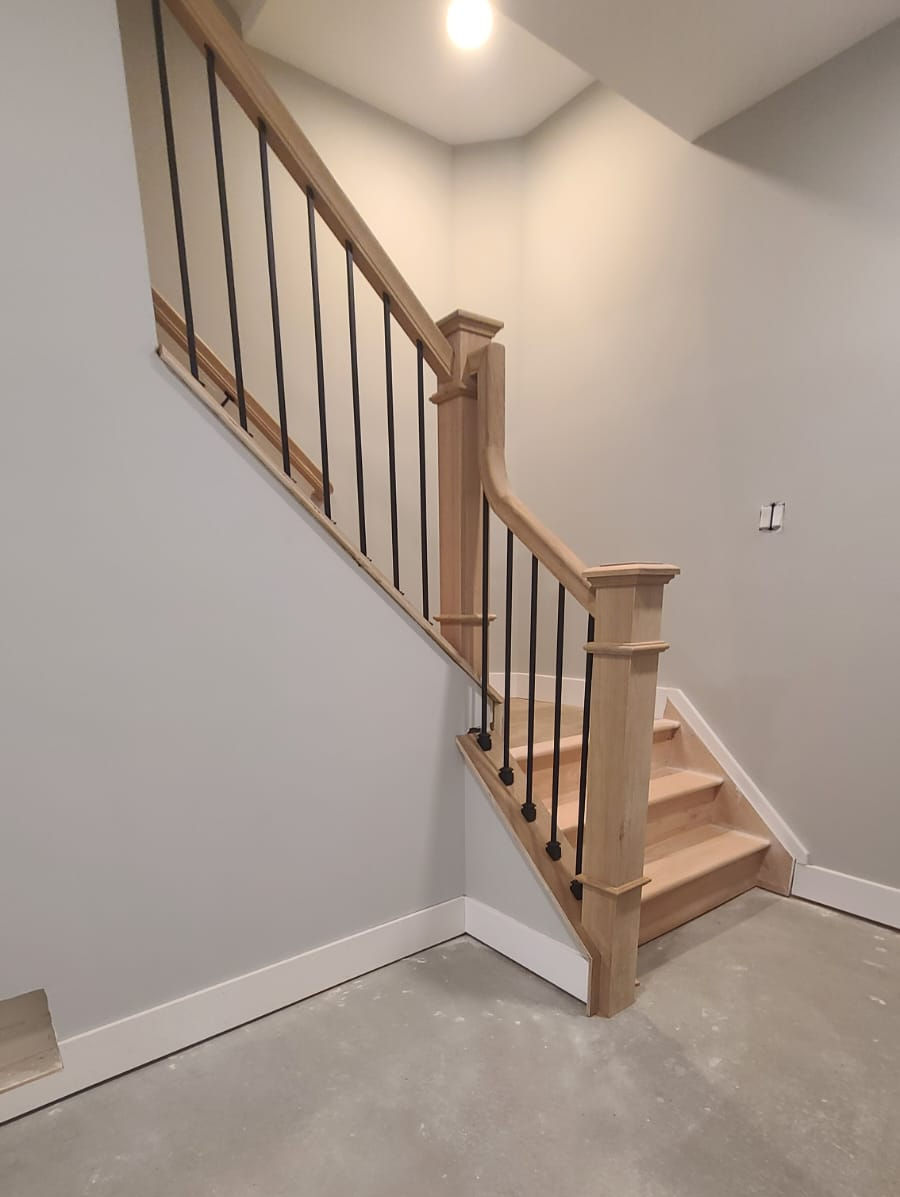
In closed stairwells, a wall-mounted handrail is often the smartest and most space-efficient option. It provides reliable grip support without eating into stair width, and when paired with neutral finishes or satin black hardware, it adds contrast and clarity without feeling visually heavy.
For staircases with open sides or a small landing, square wood posts paired with slim metal balusters are a popular choice.
This combination adds structure and visual interest while still keeping the overall look light and balanced. It’s a style that feels intentional without overpowering the space.
Design choices like these are especially effective when you want a lower-level staircase to feel like a natural extension of the rest of the home, not an afterthought tucked out of sight. When done right, the railing helps visually connect spaces rather than calling attention to tight dimensions.
If you’re considering mixing materials but want to avoid an overly industrial look, we break down how to strike that balance in Can You Mix Wood & Metal Railings? The Right Way to Do It
Common Railing Code Mistakes to Avoid
Even when homeowners try to follow the rules, stair railings are one of the easiest areas to get wrong — awkward layouts, older construction, and outdated advice all tend to collide here. The result is often a railing that looks fine at a glance, but doesn’t pass inspection or perform well in everyday use.
Here are two of the most common issues we see when railings are upgraded or replaced on indoor staircases.
Installing Railings Without Double-Checking Placement
This is a scenario we run into all the time during stair upgrades: the stairs are already in place, the railing goes in afterward, and no one rechecks the measurements. On paper it looks right. In practice, it feels off the moment someone uses it.
This isn’t just about hitting a code number. Placement directly affects usability. On tighter staircases — especially those used for laundry, storage, or daily access — even being an inch too high or too low can make a handrail awkward or unreliable when someone actually needs support.
That’s why the official height range of 34 to 38 inches (measured from the stair nosing) matters. It’s designed to work for a wide range of users, from kids to older adults, and to feel natural in motion — not just compliant on a checklist.
Correct placement is one of the areas where professional installation makes a real difference. It accounts for stair pitch, wall conditions, and how the railing will actually be used, not just where it technically fits.
To see how proper handrail height and placement are measured in real-world installations, this breakdown from building professionals explains it clearly: The Spruce’s Stair Handrail and Guard Code
Using Non-Code Materials or Insecure Mounts
A railing is only as safe as its weakest point — and in many older homes, that weak point isn’t the railing itself, but how it’s mounted. Loose brackets, undersized screws, or anchors driven into drywall instead of solid framing are all red flags we see far too often.
We’ve also come across plenty of makeshift “handrails” over the years — decorative trim, leftover fencing, even metal piping — that may look acceptable at first glance but don’t meet current code standards. These shortcuts tend to fail when they’re needed most, especially during a slip or misstep.
Even when the material itself is technically strong enough, proper mounting is critical. A handrail needs to be securely fastened into solid backing so it can support real weight and repeated use. Anything less turns a safety feature into a liability.
This is one of the most common issues homeowners inherit from older installs or past DIY work. If you’re unsure whether an existing railing is actually safe — not just attached — it’s worth taking a closer look. We break down the real risks and long-term consequences in: The Hidden Costs of DIY Railing Installation

Don’t Wait on Stair Safety
It’s easy to overlook secondary staircases. They’re often out of sight, tucked behind a door or leading to a part of the home that doesn’t get much attention — until suddenly they do. A finished lower level, a busy laundry area, or a growing family can quickly turn a rarely used staircase into a daily path.
Here’s the bottom line: if a staircase has four or more risers, building code requires a handrail. Even when one isn’t strictly required, adding a properly installed railing is one of the simplest ways to make your home safer and more comfortable to use — without taking on a major renovation. That’s why many homeowners choose to move forward with professional stair railing installation before issues arise.
Beyond code compliance, a railing brings structure and intention to the space. It improves safety for kids, older adults, guests, and pets. It helps staircases feel finished rather than overlooked. And when designed and installed correctly, it can absolutely add to both usability and long-term value.
If you’re unsure whether your stairs meet current requirements, or you’re thinking about upgrading for peace of mind, having an experienced professional take a look can remove the guesswork. A qualified railing contractor can evaluate layout, mounting, and code considerations and recommend a solution that fits both your home and how you actually use it.
Not sure if your stairs meet today’s standards? Reach out to Up Stairs Rails — we’ll take a look and help you get it right.


Comments