


What Are the Parts of a Staircase Called? A Simple Homeowner's Guide

Have you ever heard a contractor mention a newel post, baluster, or stringer and had no idea what they were talking about? You're not alone. Most homeowners know the basics, like stairs and handrails, but the individual parts of a staircase often have names they've never heard before.
Whether you're planning a staircase remodel, replacing an outdated railing, or simply curious about how your stairs are built, understanding the different parts of a staircase can make the entire process much easier. Knowing the correct terminology also helps you communicate with contractors, compare estimates, and make more informed decisions about repairs or upgrades.
In this guide, we'll break down the anatomy of a staircase in simple, homeowner-friendly language. Along the way, you'll find labeled graphics that make it easy to identify each component, understand what it does, and see how every piece works together to create a safe, sturdy, and beautiful staircase.
The Anatomy of a Staircase
A staircase is much more than a series of steps. It's a carefully engineered system of structural and decorative components that work together to provide strength, stability, and safety. While some parts support the weight of the staircase, others improve comfort, meet building code requirements, or add the finishing touches that define its style.
From the treads you walk on to the stringers that support the stairs and the handrails, balusters, and newel posts that make up the railing system, every component plays an important role. Understanding how these parts fit together not only helps you identify them but also makes it easier to plan renovations, discuss repairs, and choose the right upgrades for your home.
Now, let's take a closer look at each part of a staircase and what it does.
The Main Structural Parts of a Staircase
Every staircase is made up of several structural components that work together to create a safe, stable, and comfortable way to move between floors. While some parts are highly visible, others are tucked away behind the finished materials but are just as important.

Stair Tread
The tread is the flat, horizontal surface you step on when walking up or down the stairs. Since it's the part that receives the most daily wear, treads are commonly made from durable materials like hardwood, engineered wood, or other long-lasting products.
Stair Riser
The riser is the vertical board between each tread. It helps support the staircase while giving it a finished appearance. Some modern staircases use open risers, leaving the space between treads open to create a lighter, more contemporary look.
Stair Stringer
The stringer is one of the most important structural parts of a staircase. It runs along each side, and sometimes the center, supporting the treads and risers while carrying the weight of everyone using the stairs. Because the stringers are hidden beneath the finished staircase in many homes, they're often overlooked even though they provide much of the staircase's strength.

Landing
A landing is the flat platform found at the top, bottom, or between sections of a staircase. Landings provide a safe place to pause, change direction, or transition between floors. They're especially common on longer staircases that include a turn or switchback.
Stair Nosing
The nosing is the front edge of each tread that extends slightly beyond the riser below it. This small overhang provides additional foot space, improves comfort while walking, and helps increase traction. Depending on the staircase design, the nosing may have a square, rounded, or decorative profile.
Skirt Board
The skirt board is the long trim board that runs along the wall beside the staircase. While it doesn't support the stairs structurally, it creates a clean transition between the staircase and the wall by covering gaps where the treads and risers meet the drywall. Skirt boards also give the staircase a more finished, polished appearance.

The Parts of a Stair Railing System
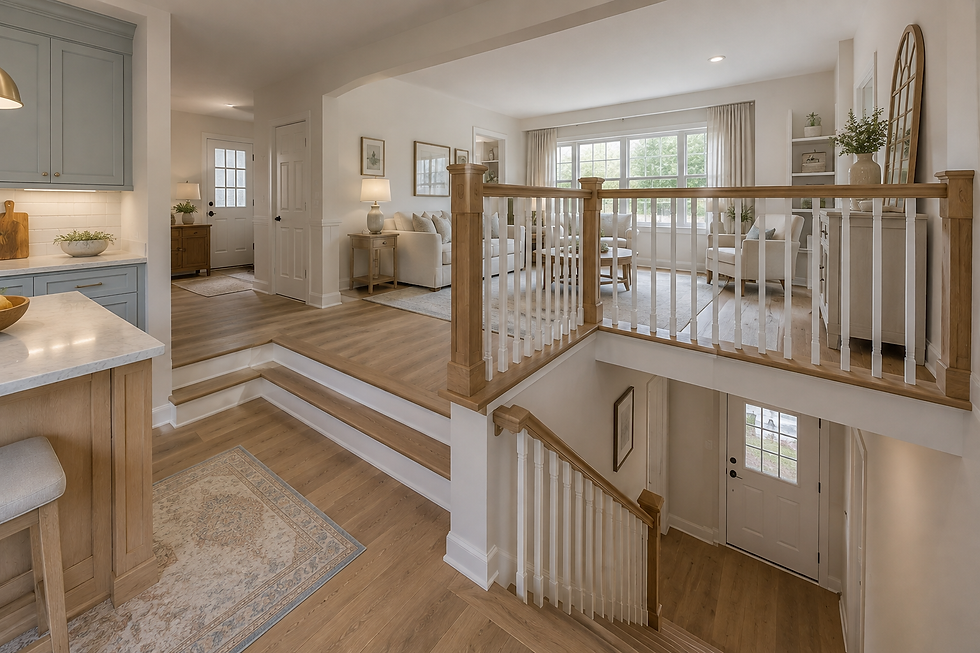
While the staircase provides the structure, the stair railing system is what adds safety, support, and style. Every railing is made up of several individual components that work together to create a secure barrier while enhancing the overall appearance of your home.
Whether you prefer a classic wood railing or a sleek, modern design, understanding these stair railing parts will help you communicate with your contractor and choose the right materials for your project. If you're considering a complete upgrade, visit our Photo Gallery to explore beautiful modern stair railing designs and get inspiration for your own project.
Handrail
The handrail is the part of the railing you hold onto while walking up or down the stairs. It's designed to provide balance and support, making the staircase safer for everyone in the home. Handrails come in a variety of shapes, sizes, and materials, including wood, metal, and combinations of both.

Newel Posts
Newel posts are the large vertical posts located at the beginning, end, and sometimes at landings or turns in the staircase. They anchor the railing system, providing strength and stability while also serving as one of the staircase's most decorative features. Newel posts are available in everything from simple square designs to ornate, turned profiles.

Balusters (Spindles)
Balusters, often called spindles, are the smaller vertical pieces that fill the space between the handrail and the staircase. Their primary job is to help prevent falls by closing the openings between posts, but they also play a major role in the overall style of the railing. Depending on the design, balusters may be made from wood, wrought iron, steel, cable, or glass.
Shoe Rail (Bottom Rail)
A shoe rail, sometimes called a bottom rail, runs along the base of many railing systems and provides a mounting point for balusters. While not every staircase includes one, shoe rails are common in traditional wood railings and help create a clean, finished appearance.
Base Rail
A base rail performs a similar function to a shoe rail by supporting and securing balusters from below. Depending on the railing design and manufacturer, the terms shoe rail and base rail are sometimes used interchangeably, though certain railing systems use one instead of the other.

Railing Fittings
Fittings are the specialized connectors that allow handrails to change direction, transition around corners, or meet other sections of the railing. Common fittings include goosenecks, easings, and elbows, helping the railing follow the natural flow of the staircase while maintaining a finished look.

Handrail Brackets
When a handrail is mounted directly to a wall, handrail brackets securely fasten it in place. These brackets are designed to provide strong support while keeping the handrail at the proper height for safe everyday use.
For residential stairways, handrail height requirements are established by local building codes. You can learn more through the International Code Council (ICC) or the New Jersey Department of Community Affairs.
End Caps
End caps are decorative finishing pieces attached to the ends of certain handrails. While they don't affect the structural performance of the railing, they provide a polished appearance by covering exposed ends and completing the overall design.

Together, these components create a complete stair railing system that combines safety, durability, and style. Understanding what each part does makes it easier to discuss remodeling options, compare estimates, and choose the railing design that's right for your home.
Decorative Parts vs. Structural Parts
Not every part of a staircase serves the same purpose. Some components are essential for strength and safety, while others are primarily decorative and help define your home's style. Understanding the difference can make planning a staircase remodel much easier.
Structural Stair Components
These parts are responsible for supporting the staircase and helping keep it safe for everyday use.
Stringers support the entire staircase.
Treads provide the surface you walk on.
Risers add stability between each tread.
Landings create safe transition areas between flights of stairs.
Handrails provide balance and support while using the stairs.
Newel posts anchor the railing system.
Balusters (spindles) help prevent falls by closing the space beneath the handrail.
Many of these structural components must meet building code requirements to help ensure your staircase is safe, stable, and built to modern standards. That's one reason it's important to work with an experienced stair and railing professional when planning repairs or renovations.

Decorative Stair Components
These pieces enhance the appearance of your staircase but typically don't provide structural support.
Decorative newel post caps
Ornamental balusters
End caps
Handrail fittings
Decorative trim and moulding
Accent details
Choosing decorative features allows homeowners to personalize their staircase while keeping the underlying structure safe and code compliant.
Common Stair Parts Homeowners Confuse
Stair terminology can be confusing, especially since some words are used interchangeably. Here are a few of the most common mix-ups homeowners encounter.
Baluster vs. Spindle
In most residential staircases, baluster and spindle refer to the same vertical railing component. While professionals often prefer the term baluster, many homeowners use spindle, and both are generally understood.
Newel Post vs. Baluster
A newel post is the large support post located at the beginning, end, or turn of a staircase. A baluster is one of the smaller vertical pieces that run between the newel posts and support the handrail.
Handrail vs. Guardrail
A handrail is the rail you hold onto for support while walking up or down the stairs. A guardrail is the complete protective barrier that helps prevent falls from elevated surfaces and typically includes the handrail, balusters, and supporting posts.
Stringer vs. Skirt Board
The stringer is the structural support that carries the weight of the staircase. The skirt board is a decorative trim board installed along the wall to give the staircase a finished appearance. While they may look similar from certain angles, they serve very different purposes.
Why Knowing Stair Terminology Matters
Learning the names of your staircase components isn't just about expanding your vocabulary. It can actually make your next home improvement project much smoother.
When you understand the different parts of a staircase, you'll be better prepared to discuss design options with contractors, compare estimates, understand product recommendations, and ask informed questions throughout your project. It also becomes much easier to explain which components you want to repair, replace, or upgrade.
Whether you're installing a completely new railing system or simply replacing a few outdated parts, knowing the correct terminology helps everyone stay on the same page and reduces the chances of confusion.
If you're planning an upcoming project, browse our Photo Gallery to see examples of completed stair and railing installations and gather ideas for your own home.

Frequently Asked Questions
What are the main parts of a staircase?
The primary parts of a staircase include the treads, risers, stringers, landings, nosing, handrail, newel posts, and balusters. Together, these components create a safe and functional staircase.
What is the difference between a baluster and a spindle?
In residential construction, the terms baluster and spindle usually refer to the same vertical railing component. "Baluster" is the more technical term, while "spindle" is commonly used by homeowners.
What is the large post at the bottom of the stairs called?
The large support post at the beginning or end of a staircase is called a newel post. It anchors the railing system and provides structural support.
Which parts of a staircase are structural?
The stringers, treads, risers, landings, handrails, newel posts, and balusters all contribute to the staircase's strength, stability, or safety. Decorative trim and accessories primarily affect appearance rather than structural performance.
Can I replace just my stair railing without replacing the entire staircase?
In many cases, yes. If the staircase itself is structurally sound, homeowners can often replace the railing system while keeping the existing stairs. A professional inspection can determine whether your staircase is suitable for a railing-only upgrade.
What are open-riser stairs?
Open-riser stairs are staircases without solid risers between the treads. They create a more open, modern appearance but must still comply with applicable building code requirements for safety.

Now You Know the Parts of a Staircase
Understanding the parts of a staircase doesn't have to be complicated. Once you know the difference between components like treads, risers, stringers, newel posts, and balusters, you'll feel more confident discussing repairs, comparing estimates, or planning a staircase renovation.
Whether you're updating an older staircase or designing something completely new, knowing the terminology helps you make informed decisions and communicate your vision more clearly. It's a small investment of time that can make your next home improvement project much smoother.
If you're ready to upgrade your staircase, replace an outdated railing, or simply explore what's possible, browse our Services to see completed projects or contact our team for a free estimate. We're happy to help you create a staircase that's safe, functional, and beautifully designed.


Comments